 ×
×
When you get a mosquito screen door installed, you expect the screen to keep the small bugs out, and the large bugs out while allowing the fresh air to get through. Sometimes, the screen fails and small gnats, mosquitoes, and large flies still get through the screen. It can be very frustrating. Some screens can be impenetrable while others can fail. There are many valid reasons as to why the mesh screen door works and why the insect-proof barrier fails. Why the mesh screen door works is a science based reason, while the insect-proof barrier failing is a rational reason. The mesh barrier and the integrity of its installation work as a complete system to fail to keep screws and bugs of all sizes out.
Being able to identify and understand the system allows you to gain the right product. It allows you to differentiate a door with a hinge from a door with a robust and functional hinge system that can protect the home from bugs getting in. The visual barrier not only provides look and feel aesthetics, it also provides robust protection. The focus of this article is providing the relevant elements to help understand the visual barrier, based on the principle of product design and installation.
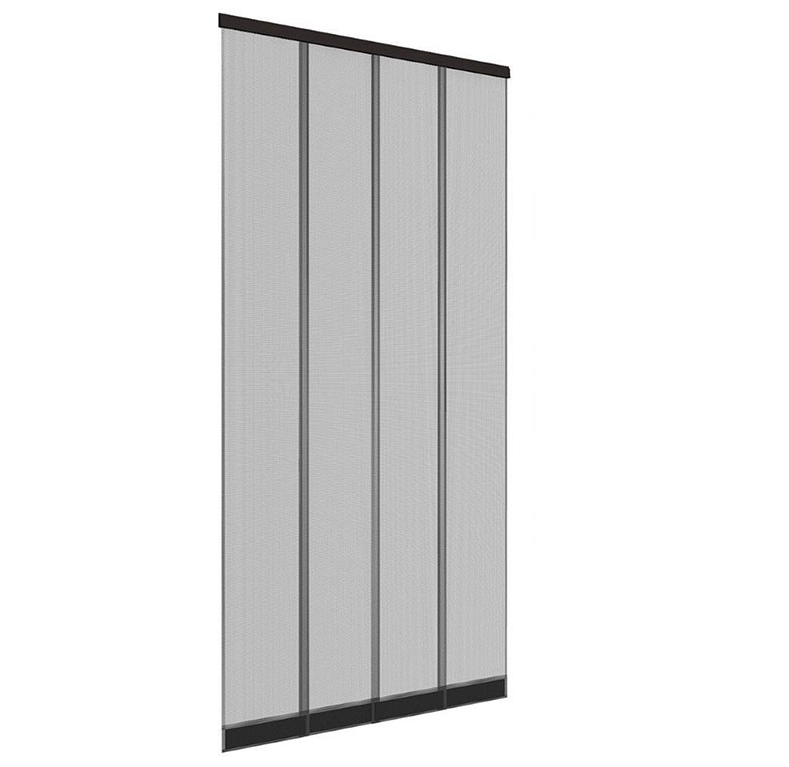
The heart of a mosquito screen door is its mesh component. Blocking insects and keeping the door functional comes down to two things: mesh count and the type of material.
When referring to mesh count, you'll see it noted in a way such as "18x16" or "20x20." This means the number of threads in a square inch, so the larger the number, the tighter the weave, and the smaller the holes. Standard fiberglass mesh (18x16) is as sufficient deterrent to houseflies and mosquitoes, but larger populate. Mesh of sufficient fineness is required to stop smaller insects, such as biting midges (commonly referred to as no see um midges) or gnat swarms. Blocking is a mesh (or threads) space o.85mm or smaller. To management insect of most concern, this is the most critical decision.
A mesh's material is just as relevant as its performance and durability. The most common mesh is fiberglass coated with PVC. It is flexible and resistant to rust and corrosion and allows great visibility and airflow. In case there are pets or harsher conditions, polyester or stainless steel meshes resist tearing and puncturing. Meshes of higher quality do not slack over time and are tensioned to prevent gaps.
A frame is just as important as the mesh. A frame is what offers the vital tension that keeps the mesh in place.
The rigidity and strength of the frame material is extremely important. Aluminum is the industry norm for high quality for a reason: it's strong, lightweight, and won't rust or warp as wood or cheap plastics might. A bent frame will ruin the screen's fit, leaving gaps along the sides or corners. A quality aluminum frame will ensure the door keeps its rectangular shape season after season and will keep the mesh tensioned.
The seals are the finishing touch on the barrier system. This is the spline (the rubber cord that keeps the mesh in the frame’s channel) and all the weatherstripping and brush seals on the perimeter. A loose or degraded spline causes the mesh to pull away from the frame. The seals on the sliding or retracting doors along the tracks and in between the door and the fixed frame are the most important. Dual and triple brush seals are standard on high performance doors. These seals create a labyrinth that even tiny gaps can’t get bugs through. Without these seals, the finest mesh is useless against bugs.
The best quality mosquito screen door is only as good as the install. Installation is how the final fit gets determined in your doorway.
The door needs to be installed perfectly plumb (vertical) and level (horizontal). It needs to be aligned in order to sit flush within its opening, and against its seals. Any gaps that are created from this misalignment will be a problem. A gap on the latch side is a common failure for hinged doors. An unlevel track for sliding or retracting doors will cause the door to be able to close fully or create a gap in the seal in the door’s height.
Gap tolerance is recorded in millimeters, and experts in maximum protection installation say that once a gap is larger than 1mm, it is an open invitation even for the smallest mosquitoes. During every Installation, all interfaces need to be inspected. This includes where the door meets the threshold and the side jambs and head. Wherever gaps exist, they're to be filled with the proper weather strip and seal to not only keep the weather out but seal the bugs out, too.
Day one door performance is one thing. Performance a year in’s a whole other ball game. Factors long-term performance, and certainly, the durability and care for the door.
The sun as a prime culprit for screen material degradation and the ax that decisively impacts the PVC coating on the fiberglass mesh is that it also becomes brittle and prone to cracking and tearing. Added to the dulling effects on the structural polymers in the frames and seals are the added weakening factors. Thus, in sunny environments high-performance doors with UV protection are a must.
Wear and tear on the screen doors and mesh edges, handles, and frame joints are all reinforced features of a strong and resilient screen door. Simple maintenance protects the insect proofing, regular cleaning of the screen mesh removes debris, and the sliding door track is inspected and cleaned, which ensures it closes fully. Small a tear or replacement weatherstripping are essential maintenance tasks that are often overlooked.
Some factors remain outside of the door’s physical frame that can impact effectiveness. Knowing and understanding these factors will help set reasonable expectations.
When indoors, fans or HVAC systems create a negative pressure inside the house. This pulls air in, which can suck tiny pests through any opening. Positive pressure caused by an outward-blowing bathroom fan can help. The position of the door is important, as well. A screen door that is directly downwind from an external light that draws in bugs will be under constant attack, and any weakness to the door will be exaggerated.The last variable here is user behavior. Propping the door open even a tiny bit, allows kids or pets to sneak through and compromises the entire system. Making sure the door closes and latches every single time is the most important thing a user can do. A magnetic latch or self closing door can help keep users on track.
The insect-proof performance of a mosquito screen door is the result of a seamless combination of several factors. The precision blending of high-quality mesh, a sturdy and perfectly sealed frame, thoughtful installation, and user behavior to keep the screen door the shut. It is a system of multiple, interdependent components that cannot afford any weaknesses.
In the world of screen doors, there is more to a screen than the mesh. The thoughtful craftsmanship of the frame, the precision of the sealing system, the clarity of the installation steps; all of these will guarantee that you get the bug-free home that you have been wanting after investing in a screen door. A well made screen door, with all these factors considered, will do more than create a barrier; it will provide a high level of insect-free ventilation for years to come.

 EN
EN